
 La C.R.I. dal Risorgimento alla vigilia della Grande Guerra (Quaderno 16)
 Subtotale: €15,00
Abstract
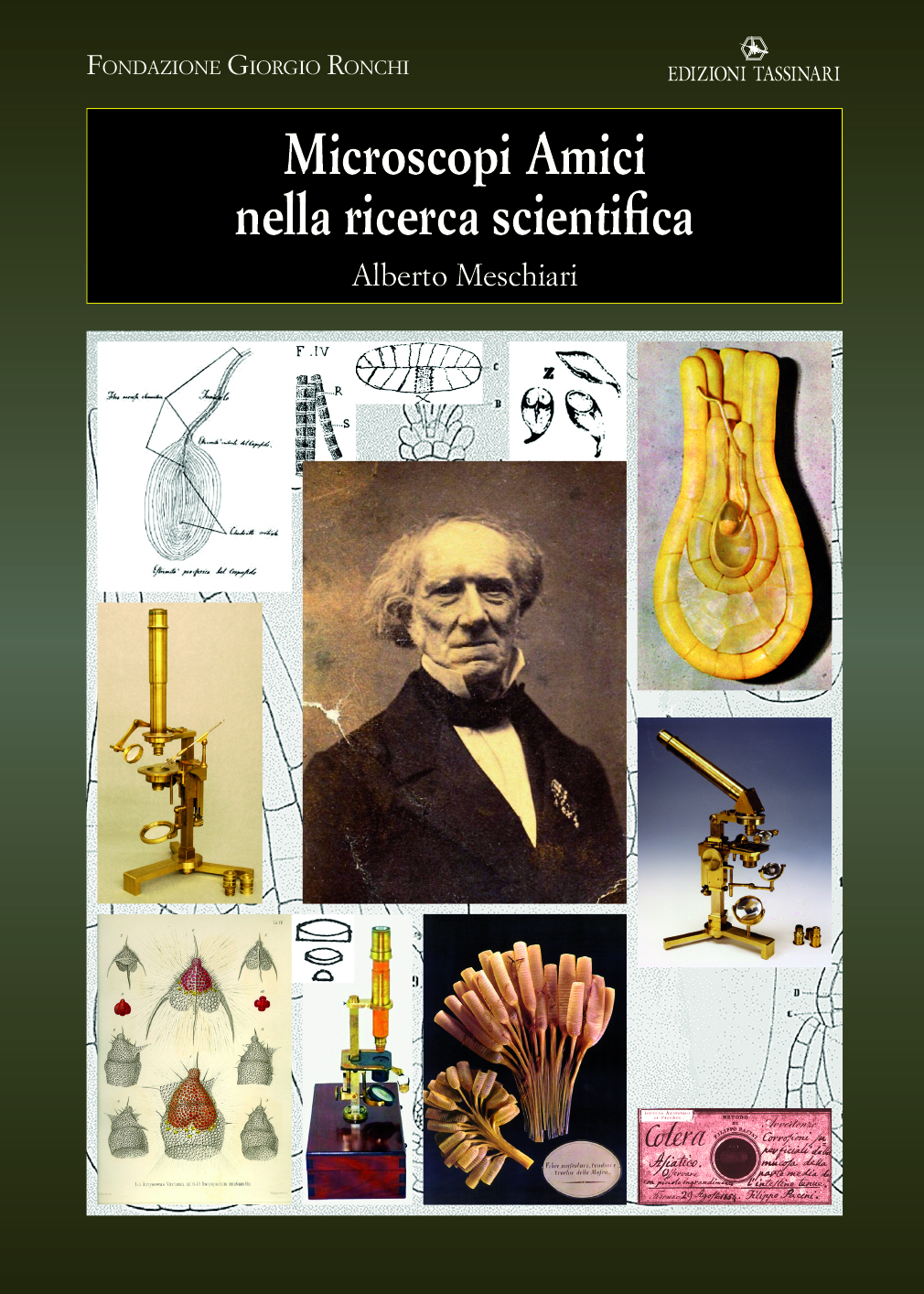
Microscopi Amici nella ricerca scientifica
L’impiego sistematico del microscopio a scopi scientifici si affermò decisamente in Europa solo a partire dagli anni Quaranta-Cinquanta del diciannovesimo secolo. Prima di allora si era fatto strada solo lentamente nei laboratori privati e poi nei musei e nelle università, e ancora più lentamente negli ospedali, specialmente in Italia. Ma, a mano a mano che si diffondeva, modificava radicalmente il tipo di approccio alla conoscenza dei fenomeni della vita. Giovanni Battista Amici fu uno dei pochissimi a concepire fin da subito il microscopio come uno straordinario strumento di ricerca scientifica. E di quel cambiamento di mentalità fu un protagonista e un antesignano in due modi: come perfezionatore dello strumento, e come micrografo, osservatore della vita cellulare.
La diffusione del microscopio nella pratica della ricerca scientifica sollecitò al tempo stesso la produzione dei primi grandi manuali di microscopia: Des microscopes et de leur usage di Charles Chevalier uscì a Parigi nel 1839; la Mikrographie di Hugo von Mohl è del 1846; due anni dopo John Quekett pubblicò A practical treatise on the use of the microscope; Het Mikroskoop, di Pieter Harting, uscì in olandese in tre volumi fra il 1848 e il 1854, prima di essere tradotto in tedesco. Sono testi che rimangono essenziali per chi voglia studiare quei primi decenni. E sono testi in cui l’opera di Amici ha sempre una gran parte.
Ripubblicando il Libro de’ conti del laboratorio voce per voce, e incrociandone i dati con il registro dei visitatori del suo laboratorio e la ricca corrispondenza, cominciai ad attribuire un’identità precisa ai nomi degli acquirenti dei suoi microscopi. E conoscendone l’esatta destinazione, divenne a quel punto possibile documentarne l’impiego nella ricerca scientifica. Questo è appunto ciò che fa questo volume. Oggi non conosciamo più soltanto Amici costruttore di microscopi, ma conosciamo molti dei suoi microscopi in mano a scienziati esattamente identificati, al lavoro in precisi laboratori e ambiti di ricerca. Scienziati quali lo stesso Amici, Adolphe Brongniart, Ernst Wilhelm Brücke, Alfred Des Cloizeaux, Pierre-Armand Dufrénoy, René Dutrochet, Otto Funke, Ernst Haeckel, Pieter Harting, Wilhelm Hofmeister, Wilém Dusan Lambl, Charles-François Brisseau Mirbel, Hugo Mohl, Filippo Pacini, Matthias Jacob Schleiden, e altri ancora.
Amici microscopes in scientific research
We often forget that modern biological research and medicine would have been impossible without the extraordinary progress that this vital tool for investigation underwent in the nineteenth century, and that improvements in the microscope and methods of observation have allowed for the identification, treatment and eradication of terrible diseases. It was in the nineteenth century that the microscope finally came of age as a vital scientific instrument, a process to which Giovanni Battista Amici gave an important contribution.
It was not until the 1840s and 1850s that the microscope began to be used systematically for scientific investigation in Europe. Giovanni Battista Amici was one of the very first scientists to appreciate the microscope’s extraordinary potential as a tool for scientific research, twenty years before the microscope gained widespread use. Amici was able to make many fundamental improvements to this instrument.
Up until the second half of the 1820s (remember that 1824 is considered the year of birth of the achromatic microscope), the microscope was still largely a curiosity, a plaything for princes, kings and the wealthy. Very slowly it made its way into private laboratories, and from there into museums and universities, but it was even slower to be adopted in hospitals, especially in Italy. As it became more widely accepted, however, it radically altered the approach used to investigate living phenomena. Giovanni Battista Amici made a vital contribution to this change in mentality in two ways: through the improvements he made to the instrument and through his observations of cellular life.
The rise of the microscope in the practice of scientific research also spawned the first great treatises on microscopy: Des microscopes et de leur usage by Charles Chevalier was published in Paris in 1839; Mikrographie by Hugo von Mohl came out in 1846; two years later John Quekett published A practical treatise on the use of the microscope; Het Mikroskoop, by Pieter Harting, came out in Dutch in three volumes between 1848 and 1854 before being translated into German. Amici’s work has a prominent place in these publications, which remain essential reading for anyone wishing to study those first few decades of the nineteenth century.
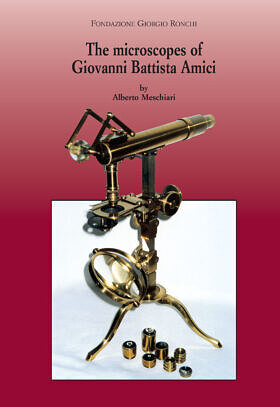
In the year 2003 I decided to republish his Workshop account book item by item. I published this work along with other documents of value to a comparative investigation. By doing so, I made some interesting discoveries and began to identify with precision the purchasers of many of his instruments. Knowing the precise destination of those microscopes, would it then be possible to document their use in scientific research. This volume is dedicated to this. Today our knowledge is no longer limited to Amici as a microscope maker: we also know which scientists were using his microscopes and the laboratories and areas of research in which they were working: scientists such as the same Amici, Adolphe Brongniart, Ernst Wilhelm Brücke, Alfred Des Cloizeaux, Pierre-Armand Dufrénoy, René Dutrochet, Otto Funke, Ernst Haeckel, Pieter Harting, Wilhelm Hofmeister, Wilém Dusan Lambl, Charles-François Brisseau Mirbel, Hugo Mohl, Filippo Pacini, Matthias Jacob Schleiden, etc. And this knowledge gives us a good idea of the international standing of his work.
Alberto Meschiari è ricercatore di Filosofia morale presso la Scuola Normale superiore di Pisa, nonché curatore dell’Edizione Nazionale delle opere e della corrispondenza di Giovanni Battista Amici. Su Amici ha pubblicato: The microscopes of Giovanni Battista Amici, Fondazione Giorgio Ronchi, Firenze 2003; Il Libro de’ conti del laboratorio di Giovanni Battista Amici e altri documenti inediti, Fondazione Giorgio Ronchi, Firenze 2003; Come nacque l’Officina Galileo di Firenze. Gli anni 1861-1870, Fondazione Giorgio Ronchi, Firenze 2005; Edizione Nazionale delle Opere e della Corrispondenza di Giovanni Battista Amici: vol. I, Opere edite, in due tomi, Bibliopolis, Napoli 2006; vol. III, Corrispondenza, tomo I, Corrispondenti francesi, Fondazione Giorgio Ronchi, Firenze 2010; vol. III, Corrispondenza, Tomo II, Corrispondenti americani, inglesi, irlandesi, Fondazione Giorgio Ronchi, Firenze 2012; sito web Giovanni Battista Amici. Ottico, astronomo, naturalista, all’indirizzo http://gbamici.sns.it, realizzato presso la Scuola Normale Superiore, Pisa 2006; nonché numerosi articoli e corrispondenze, fra cui quelle di Amici con Francesco Carlini, Carlo Matteucci e Angelo Secchi, Ottaviano Fabrizio Mossotti, Giuseppe Bianchi, Leopoldo Nobili, Enrico e Macedonio Melloni, Filippo Pacini, Giovanni Plana, il Reale Officio Topografico di Napoli, Alexander von Humboldt, Lorenz Oken, Michael Faraday, Emil du Bois-Reymond, Charles Babbage, Franz Xaver von Zach, William Henry Fox Talbot; e con ottici e meccanici: Buron, Chevalier, Duboscq, Ertel, Fraunhofer, Guinand e Feil, Hartnack, Lerebours, Merz, Nachet, Oberhaeuser.
Come esperto di Amici ha partecipato al video di Gianluca Paoletti sulla Prima Riunione degli scienziati italiani, Nel nome di Galileo. Pisa, 1839, realizzato da “La Limonaia Scienza viva” in collaborazione con il MIUR, Pisa 2011. È stato co-curatore delle mostre: Obiettivo Natura. Strumenti ottici e osservazioni botaniche di Giovanni Battista Amici, tenutasi presso il Museo Civico d’Arte di Modena nell’ambito del Festival della filosofia 2011 dedicato alla natura; e Giovanni Battista Amici. Ottico, astronomo, naturalista, tenutasi presso il Foro Boario di Modena dal 29 gennaio al 20 febbraio 2014.
Prodotti correlati
Tecnico Scientifico
La cooperazione nello “sviluppo” tra territorio, identità, reciprocità e mercato
€25,00
Tecnico Scientifico
€20,00
Collezionismo
€50,00
Tecnico Scientifico
€35,00
Collezionismo
€75,00
Tecnico Scientifico
€15,00
Tecnico Scientifico
Trenta progetti di Arte pubblica all’Accademia di Belle Arti di Firenze 2010-2015
€24,00